
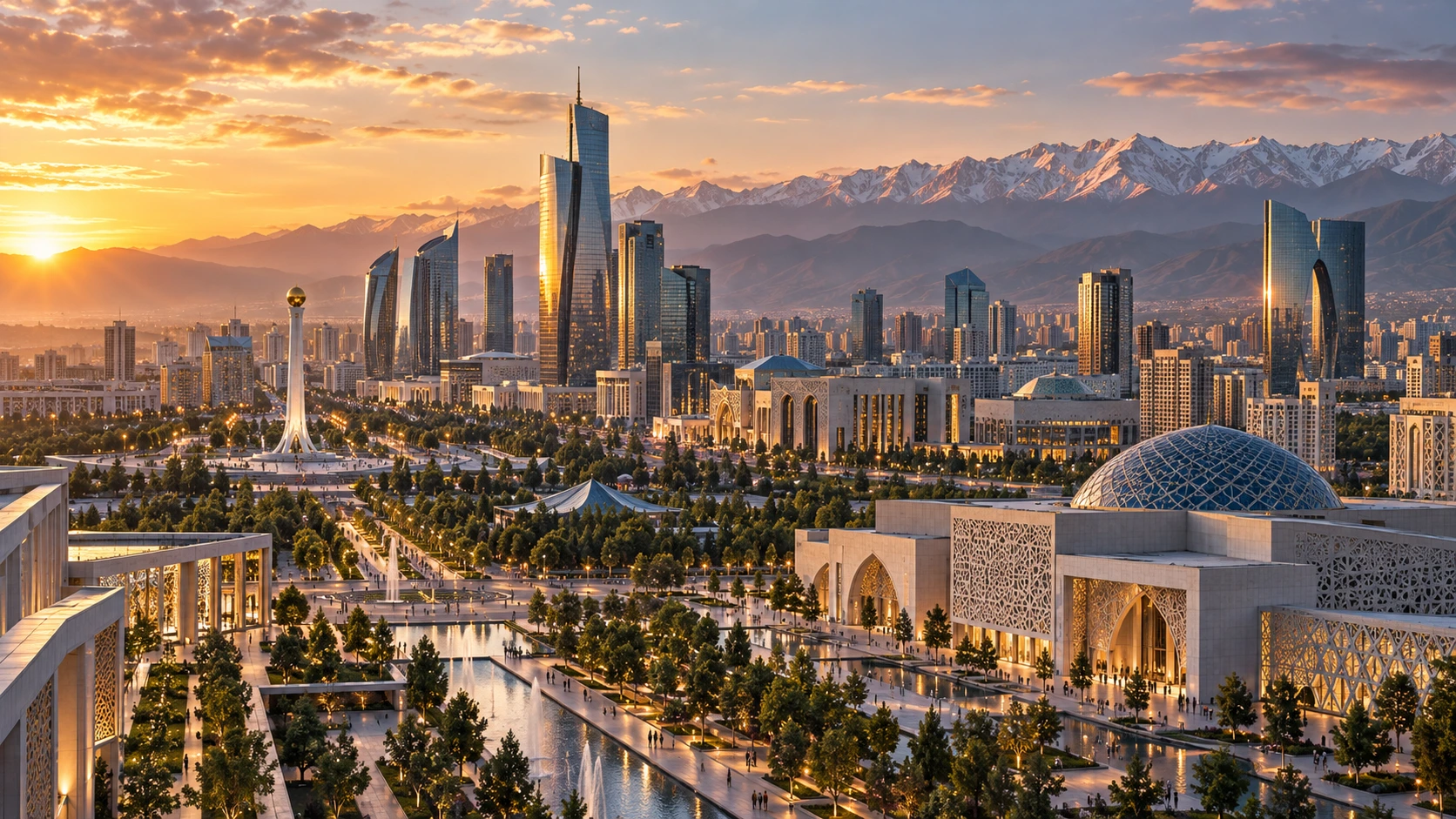
Central Asia is becoming an increasingly important architecture and development landscape, with rapidly changing cities, new public ambitions and growing demand for internationally competitive design.
Key Takeaways
- Central Asia combines rapid urban change with strong questions of identity and climate.
- Kazakhstan and Uzbekistan are key entry points for international architecture audiences.
- Public realm, mixed-use, hospitality and residential development are particularly important themes.
- The region needs more international editorial coverage based on real projects and local voices.
- WAIDE can build authority by documenting projects, studios and cities rather than publishing generic regional claims.
Kazakhstan: from individual landmarks to urban ecosystems
Kazakhstan’s major cities present very different design conditions. Almaty combines a strong landscape setting, established neighborhoods and development pressure. Astana operates at another scale, with a more recent urban fabric, strong symbolic architecture and significant opportunities for district-scale planning.
The next phase of design quality will depend less on isolated iconic buildings and more on connected urban systems: streets, courtyards, landscape, active ground floors, mixed-use programs and human-scale movement.
Uzbekistan: growth, heritage and a new hospitality economy
Uzbekistan’s architecture conversation is closely tied to heritage, tourism, infrastructure and urban growth. Tashkent in particular offers a complex context in which modernist legacies, new development and changing lifestyle expectations coexist.
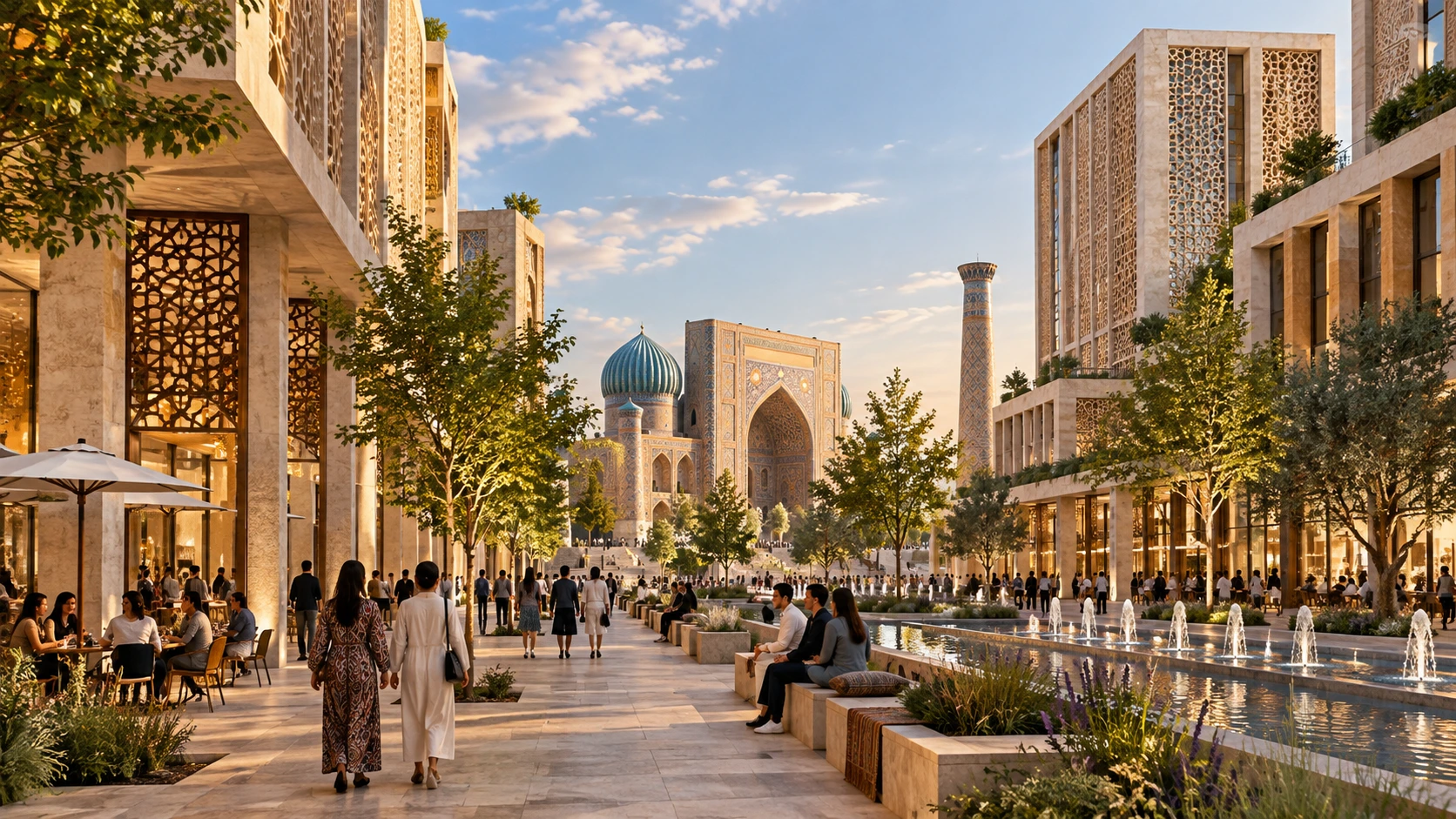
For designers, the opportunity is not to imitate historic forms but to understand the spatial intelligence behind shade, courtyards, materiality, thresholds and social life — and reinterpret those qualities for contemporary programs.
Climate should become a design generator
Central Asian cities experience climatic conditions that make generic glass-and-object architecture difficult to justify. Solar exposure, seasonal temperature ranges, wind, dust, water use and landscape resilience all have direct architectural consequences.
This is an opportunity. Deep facades, shaded transitions, courtyards, planting strategies, compact forms and thoughtful orientation can create recognizable contemporary architecture precisely because they emerge from local conditions.
The categories likely to define the next wave
Mixed-use development, residential communities, hospitality, public space, urban landscape, adaptive reuse and destination projects are likely to remain central themes. These project types sit at the intersection of commercial demand and city-making, which is where architecture can have the greatest public impact.
The region also has strong potential for design innovation in interiors, materials and AI-assisted visualization because new projects often require rapid concept communication across international teams.
Why global visibility still lags behind the quality of work
Many strong regional projects remain underrepresented in international awards and media. The reasons are often practical rather than qualitative: language barriers, limited communications teams, weak project photography, inconsistent project descriptions and a lack of structured outreach.
This is precisely where international platforms can add value — not by “discovering” a region from outside, but by creating better channels through which local work can be documented, compared and recognized on its own terms.
WAIDE View
WAIDE sees Central Asia as a priority geography for discovery. The goal should be to build a verified, project-based picture of the region — projects, studios, people, cities and development patterns — rather than repeat broad narratives from afar.
Frequently Asked Questions
Which Central Asian cities are most relevant for contemporary architecture?
Almaty, Astana and Tashkent are among the most visible regional centers, but strong projects are emerging across a much wider geography.
What project types are important in Central Asia?
Residential, mixed-use, hospitality, public realm, landscape, urban development and adaptive reuse are all strategically important.
How can regional studios gain more international visibility?
Clear documentation, strong photography, English-language project narratives, targeted awards, media outreach and consistent digital profiles can materially improve discoverability.